
Wall Hacking
Review selected non-structural or masonry wall removal only after wall type, property requirements and scope are assessed.
Controlled residential removal work
RenoExpert coordinates wall hacking where permitted, floor and wall tile removal, bathroom and kitchen demolition, built-in and false-ceiling dismantling, site clearing and make-good planning as part of residential renovation.
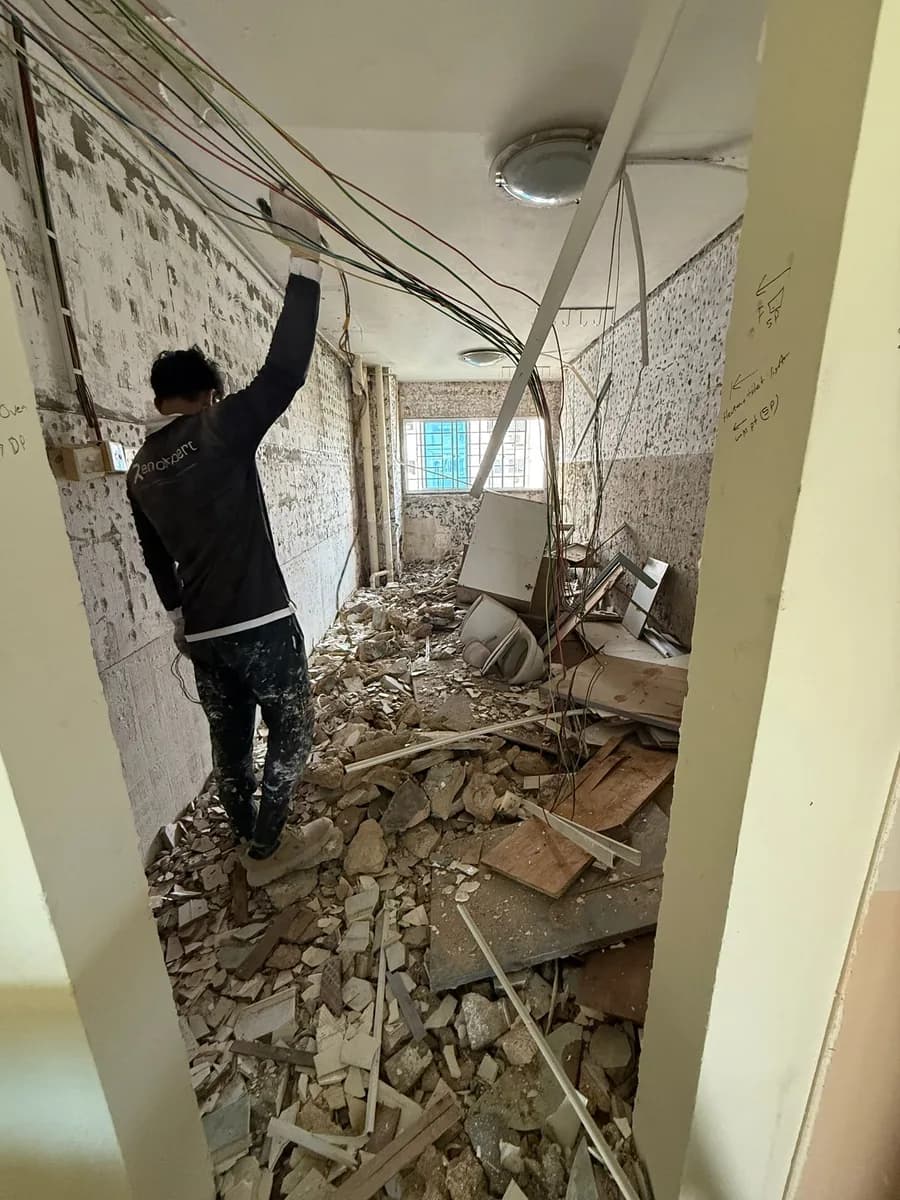
Removal services
The quotation should identify exactly what is removed, retained, cleared, disposed of and made good.
Review selected non-structural or masonry wall removal only after wall type, property requirements and scope are assessed.
Remove agreed floor tiles and review screed, levels and substrate preparation for the next finish.
Remove bathroom, kitchen or other agreed wall tiles with the surrounding substrate and fittings considered.
Coordinate removal of agreed tiles, vanity, screen, accessories and fixtures with subsequent wet-area trades.
Dismantle agreed cabinets, worktops, tiles and built-ins before the new kitchen scope begins.
Remove agreed wardrobes, consoles, shoe cabinets, storage or vanity units before replacement.
Review false ceilings, cornices, lightweight partitions or feature structures before dismantling.
Plan protection, bagging, removal, haulage and disposal only where stated in the quotation.
Wall hacking
Selected non-structural partitions, masonry walls, openings or unwanted built elements may be considered for layout changes, but no wall should be assumed removable from appearance alone.
Suitability depends on wall type, structural function, property type, site inspection, approved renovation scope and current authority or building requirements. Structural walls must not be treated like normal partitions.
HDB considerations
Some HDB renovation work may require approval or a permit, while work that does not require a permit must still follow current guidelines and conditions. Wall alterations, finishes and sanitary-area work can have different requirements.
Where professional assessment or a PE endorsement is relevant, that depends on the specific wall and submission requirements. It is not always required, and endorsement does not automatically make every alteration permissible. RenoExpert does not claim engineering approval through this page.
Tile hacking
Bathroom, kitchen and suitable living-area tiles may require removal before replacement.
Existing tile condition, substrate, screed, waterproofing, floor level and debris affect removal and preparation for new tiling or flooring.
Hacking is not always necessary. Overlay may be considered where bond, substrate, buildup, clearances and the intended finish are suitable; it is not universally preferable.
Bathroom demolition
Agreed tiles, vanity, shower screen, accessories or fixtures may be removed before waterproofing, tiling, plumbing, electrical and sanitary work. Reinstatement is not automatically included.
Explore Bathroom RenovationKitchen demolition
Removal may cover cabinets, worktop, backsplash, wall or floor tiles and selected permitted walls. Appliance removal and subsequent carpentry, plumbing, electrical and tiling work must be quoted.
Explore Kitchen RenovationBuilt-ins and ceilings
Kitchen cabinets, wardrobes, TV consoles, shoe cabinets, storage and vanity cabinets are generally dismantled in sections. False ceilings, cornices, lightweight partitions and feature structures require their own site review.
Dismantling, disposal and repair to adjacent walls, floors or ceilings remain separate scope items unless the quotation combines them. Lightweight partition removal should not be confused with structural-wall alteration.
Useful scope language
Clear terminology helps homeowners compare quotations.
Removing fixtures, cabinets or built-ins in sections.
Breaking and removing finishes, screed or selected masonry.
Broader removal work within a defined renovation area.
Protection and debris
Depending on property requirements and scope, protection may cover lifts or common areas, retained floors, doors, finishes, dust containment and temporary isolation. These measures are not assumed unless quoted.
Debris handling may include bagging, removal from the unit, haulage, disposal and common-area cleanliness. Disposal should be planned through appropriate practices, but no fee or inclusion is implied without the quotation.
Make-good works
After hacking, walls, floors or ceilings may need patching, screed repair, plastering, levelling, closing of openings, painting, tile preparation or preparation for new flooring.
Hacking and make-good are separate components unless the quotation states otherwise. The required repair may only become fully visible after removal, so known and condition-dependent work should be distinguished.
Quotation factors
No standalone universal hacking rate is verified. Package-specific removal scope should not be converted into a general public price.
Request Hacking QuoteRemoval process
The sequence depends on property requirements, removal type and subsequent work.
Share property type, photos, floor plan and the walls, finishes or built-ins proposed for removal.
Review wall or finish type, retained areas, services, access and likely debris.
Separate dismantling, hacking, disposal, protection and make-good items in the quotation.
Confirm current property, building and authority requirements where applicable before work.
Complete the protection and affected-area isolation stated in the agreed scope.
Carry out agreed dismantling or hacking and the quoted debris-handling work.
Complete quoted repairs or prepare the exposed area for subsequent renovation work.
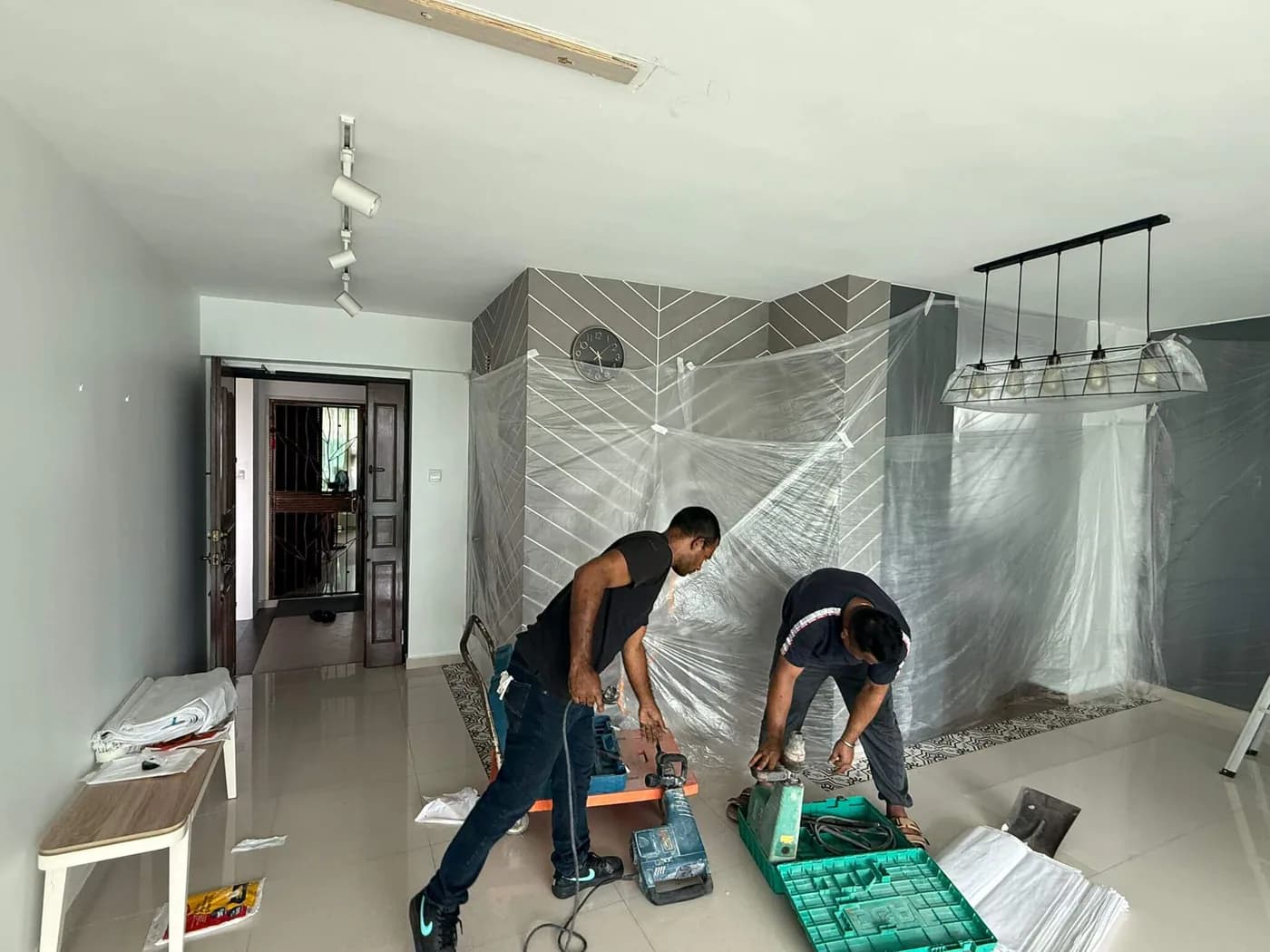
RenoExpert site photography
These genuine images show tile removal and renovation preparation rather than a staged demolition scene.
Hacking FAQ
RenoExpert coordinates selected wall hacking, floor and wall tile removal, bathroom and kitchen demolition, built-in dismantling, ceiling or cornice removal, and quoted debris clearing for residential renovation.
No. Wall type, structural function, property type, approved renovation scope and current building or authority requirements must be reviewed. Structural walls must not be treated like ordinary partitions.
Requirements depend on the actual work and current HDB conditions. Some work may require approval or a renovation permit, while other work remains subject to applicable guidelines. Confirm the proposed scope before starting.
That depends on the wall, structural implications, property and submission requirements. A professional assessment or endorsement is not assumed for every job, and it does not make an otherwise prohibited alteration permissible.
Bathroom and kitchen floor or wall tile hacking can be included where stated, together with any quoted fixture dismantling, substrate preparation, waterproofing replacement or subsequent tiling work.
Only when the quotation says so. Protection, bagging, removal from the unit, haulage, disposal and common-area cleaning should be identified as separate scope items.
Not automatically. Wall patching, screed repair, plastering, ceiling repair, painting, levelling and preparation for new tiles or floors should be stated separately.
No. A suitable overlay may sometimes be considered when the existing tiles, substrate, levels, clearances and project requirements allow it. Hacking is more appropriate when existing conditions require removal or deeper repair.
Yes. Hacking and dismantling can be coordinated at the start of a full-house project before tiling, flooring, plumbing, electrical, carpentry and painting work.
Request a quotation
Share your property type, floor plan, photos, what needs removal, whether walls are involved, bathroom or kitchen scope, and any replacement work required.
Get a Hacking Quote